Student Pilot Supply List
What to buy before you start flight training.
You do not need everything before your first lesson. Start with the day-one essentials, add study materials as ground school begins, and hold off on big-ticket items until you know what you like. If you are unsure about a purchase, ask me first.
Day-one essentials
Headset
The gear you will use on every flight. Comfort matters over a one-to-two-hour lesson, so try a few on if you can. A solid passive or mid-priced noise-reducing headset is plenty for training.
Kneeboard
Keeps your checklist, notes, and charts or an iPad within reach. Pick one that fits your leg and your device.
Notepad and pens
For briefings, notes, and writing down numbers in flight. Carry two pens and a pencil.
Flashlight or headlamp
For preflight checks in low light and for early or late flights. A red-light option helps at night. Carry spare batteries.
Fuel tester
A fuel sampler cup lets you check for water and contamination at every preflight. Keep your own in your flight bag so it is never missing.
Flight bag
A bag or backpack with room for your headset, kneeboard, charts, and water. Good pockets beat a huge bag.
Logbook
Paper or electronic. Every flight and ground session gets logged from day one.
Study materials
FAR/AIM
The regulations and the Aeronautical Information Manual. Get the current edition, in print or digital.
Pilot’s Handbook of Aeronautical Knowledge (PHAK)
The core knowledge text for ground study. The FAA offers it as a free PDF.
Airplane Flying Handbook (AFH)
Maneuvers and flight procedures. Also a free FAA PDF.
Airman Certification Standards (ACS)
The standard your checkride is graded against. Read the Private Pilot–Airplane ACS early and often. It is free from the FAA.
Ground school course
A structured, self-paced course such as King Schools, Sporty’s, or Gleim keeps your knowledge training moving alongside your flying.
Charts, navigation and electronics
EFB or iPad
ForeFlight or Garmin Pilot on an iPad is the common choice. Wi-Fi-only iPads have no built-in GPS, while cellular models do, so ask me before you buy one.
Paper charts
The current VFR sectional for Central Florida and the local Terminal Area Chart. Paper is a smart backup when a device dies or overheats. Check the edition date, since charts go out of date.
Chargers and cables
A USB power bank and the right cable for your device. Cockpit power ports vary, so do not count on one.
ADS-B receiver (later)
Optional. A portable receiver adds weather and traffic to your EFB and can supply GPS to a Wi-Fi-only iPad. Not needed on day one.
Planning and training tools
Plotter and flight computer
A plotter and E6B (or an electronic flight computer) for cross-country planning and the knowledge test. Check your testing center’s rules on tools and calculators.
Foggles
A view-limiting device for the simulated instrument training in the Private Pilot syllabus. Inexpensive, and you can wait until that part of training approaches.
Aircraft checklist
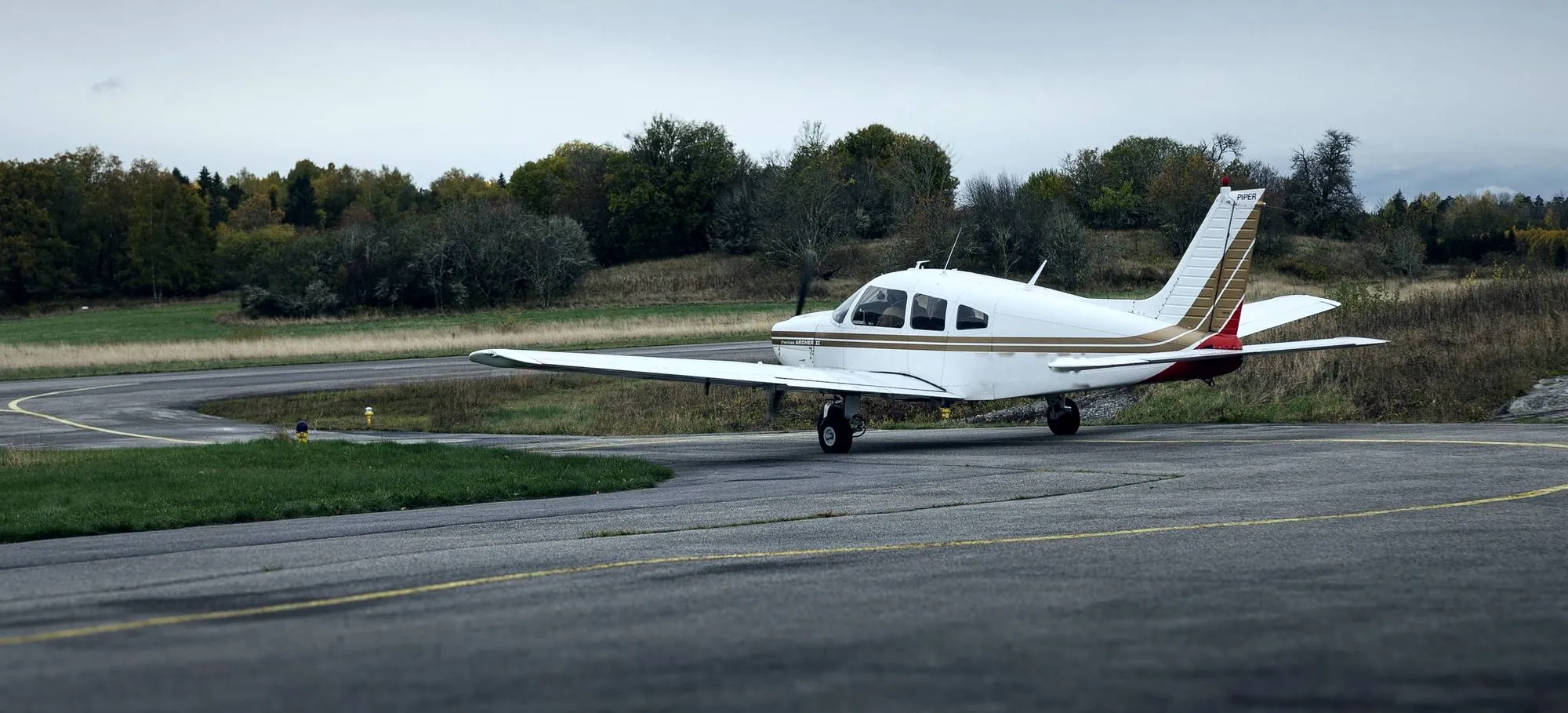
Use the checklist for the airplane you will fly: Skyhawk, Cherokee, or Archer. A preflight checklist is available on the Training Materials page.
Sunglasses
Non-polarized lenses are usually the safer choice, since polarization can make some cockpit displays hard to read.
Hat, sunscreen and water
Florida cockpits get hot on the ramp. Bring water and a snack so a long lesson does not end early.
Air sickness bags
Not glamorous, but sensible for early lessons and for passengers.
Paperwork and insurance
Photo ID and citizenship documents
Bring a government photo ID and proof of U.S. citizenship or nationality, such as a passport or certified birth certificate. Non-U.S. citizens go through the TSA Flight Training Security Program (FTSP). Confirm what you need with me before your first lesson.
FAA medical certificate
Get it early, before spending heavily on gear or lessons. I can point you toward a local Aviation Medical Examiner.
Student pilot certificate
Applied for online through the FAA’s IACRA system. Ask me if you want help with the process.
Aircraft renter’s insurance
This is not the same as apartment renters insurance. A pilot renter’s (non-owned aircraft) policy covers you when you rent club aircraft, typically liability and, optionally, damage to the airplane. The club’s own policy may not cover everything, so ask Countrywide Flyers what they require, then compare quotes from more than one aviation insurer.
Club membership
If you rent through the flying club, membership is $99 one time, then $49/month. See the Flying Club and Fees pages.
What can wait
A premium noise-canceling headset, a handheld radio, an ADS-B receiver, and instrument-training gear can all wait. Pre-packaged student kits can include items you do not need yet, so compare before buying. Prices and requirements change, so check with me, the club, and the FAA before you spend. See also Pilot Resources and Fees and Costs.